
Get Support
07496822205
Calibrated Plywood
-
 By: Ethan
- April 10, 2026
Understanding Calibrated Plywood
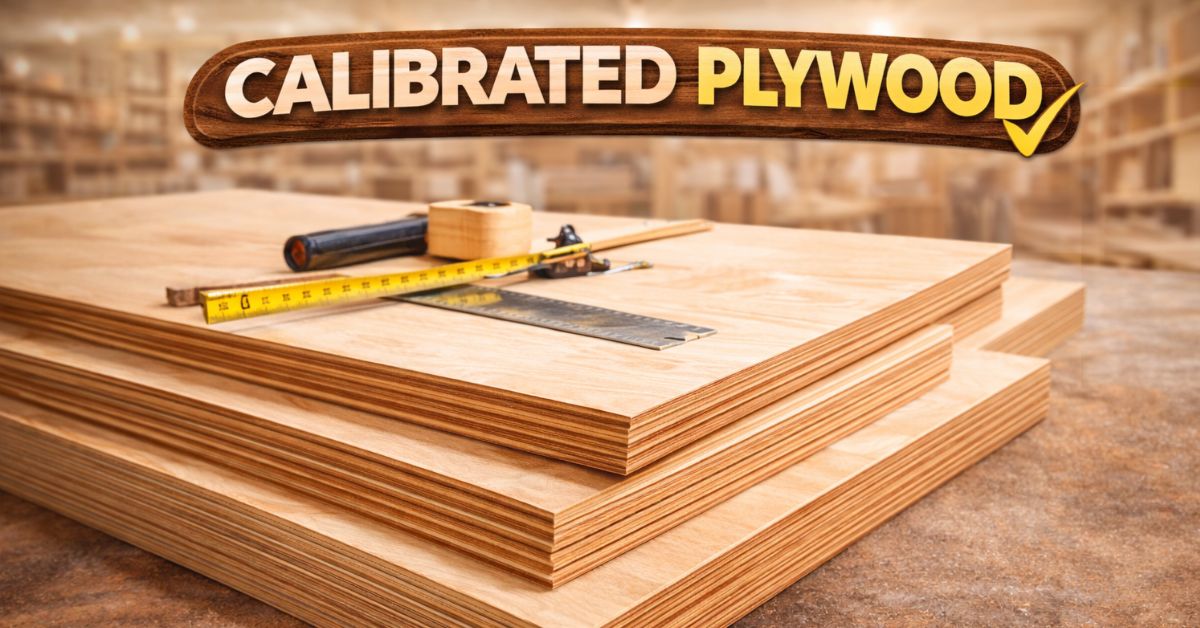
The plywood is made in a calibrated form to ensure that the thickness is the same throughout the sheet. Following the pressing, the two faces are smooth sanded using high precision machines which leaves the panel flat and homogeneous. This consistency enables it to be used in the applications where a clean surface and precise fitting is needed, particularly in modular and laminated furniture.
The way it is made
It starts with precisely chosen hardwood veneers that are dried to the appropriate moisture level. These veneers are glued with high quality resins through controlled heat and pressure. After the panel is shaped it is calibrated with sand on both sides to give it a precise thickness and a smooth finish. The sheets are then checked in order to determine compliance with standards.
These are the core features that count.
- Thickness all over the sheet.
- Direct application to a flat and smooth surface.
- Strong internal bonding
- Stable structure and slight variation.
- Aids clean and precise cutting.
- Reliable screw holding strength
Here is a brief overview of the technicalities of the product:
- Thickness tolerance: ±0.2 mm
- Construction: Hard wood veneer.
- Type of bonding: BWP/BWR grade.
- Surface: Calibrated on both sides
- Density: Firm and dense.
- Performance: Interior and semi-humid environment.
Where It Works Best
Plywood that has been calibrated is commonly used in modular kitchens, wardrobes and factory-made furniture where accuracy is a concern. It can also be used on laminated surfaces, wall panelling, partitions, and CNC-based furniture where consistency in the thickness enhances precision and finish.
How It is Better than Plywood of the regular type
Calibrated plywood is also available as opposed to regular plywood; it is thickness controlled, allowing one to have a greater degree of control in the process of installation. This surface also allows the laminates to bond smoothly, as the surface makes additional sanding unnecessary. This enhances the end finish as well as it helps save time, material and effort used in the production.
Why Choose Crosta Panel
Crosta Panel specializes in the production of plywood that is of uniform thickness and reliable strength. The control of the manufacturing process is done to give uniformity in each sheet and minimize adjustments on site. It is an option that is convenient to all professionals requiring solid material to handle accurate and neat furniture.